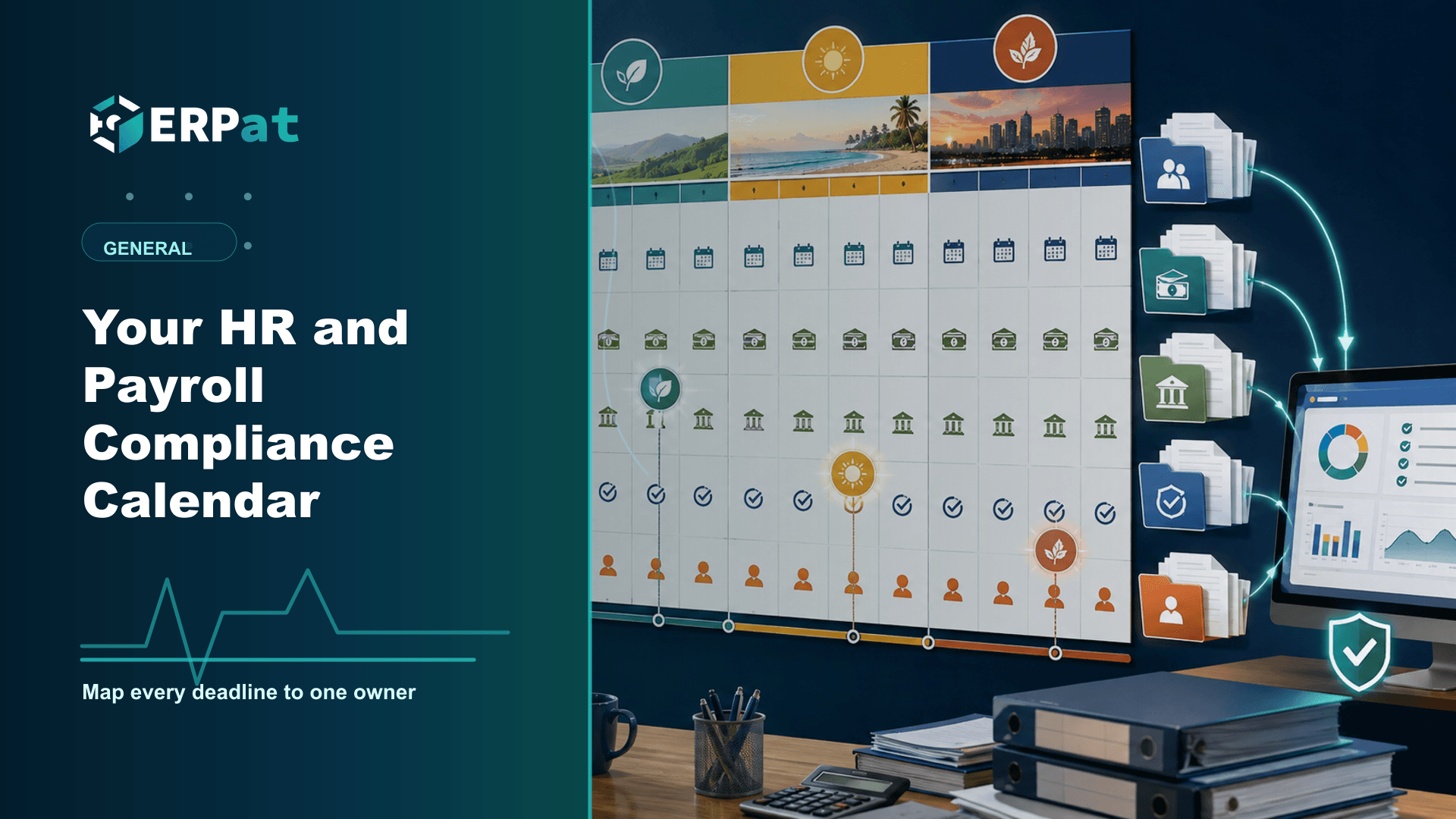

Employee Movements and Internal Mobility
Employee movements are among the most consequential records an HR team keeps and the most casually documented. Here is how to treat promotions, transfers and internal hiring as records rather than announcements.
In this guide
What to watch for
Use the article to identify repeat work, handoff gaps and places where one source of truth would help.
In this article
Someone gets promoted in March. In August, payroll asks why the rate changed, and the only answer anyone can produce is a chat thread nobody can find. Employee movements — promotions, transfers, reassignments, changes in reporting line — are among the most consequential records an HR team keeps, and among the most casually documented. The problem is rarely bad intent. It is that a movement gets treated as an announcement instead of a record.
A movement is more than a promotion
Most companies think of internal movement as promotion, which is why everything else goes unrecorded. A lateral transfer from one branch to another, a change of immediate supervisor after a reorganisation, a move between departments at the same rate, a temporary assignment to a project team, a new job title that carries no pay change at all — each of these changes something downstream. Approvals route to a different person. Leave filings land in a different inbox. Headcount and cost reporting shift. Performance history accumulated under one manager now belongs to another.
Treating only promotions as movements means the rest happen informally: a verbal agreement, a group chat announcement, and a quiet edit to the employee's record the following Monday. Nothing looks wrong on the day it happens. The cost arrives months later, when somebody has to explain what the arrangement actually was and when it started.
Where the trail usually breaks
Two habits do most of the damage. The first is overwriting. An employee file that stores one department, one supervisor and one rate shows you the present and erases the past; update it and last year's structure is simply gone. The second is scattering the approvals. The request came by email, the manager's agreement by chat, the counter-offer over a phone call, and the signed memo sits in a folder in a filing cabinet in a branch office.
Neither habit causes trouble while the people involved are still around. The trouble starts when they are not. A new HR officer inherits a file with no history. Payroll cannot reconcile a rate change against any approval. A resigning employee's certificate of employment has to be reconstructed from memory. And when a dispute or an inspection does arrive, showing what was decided, by whom, and effective when, falls on the employer — with a paper trail assembled after the fact rather than kept as it happened.
An audit trail that lives with the record
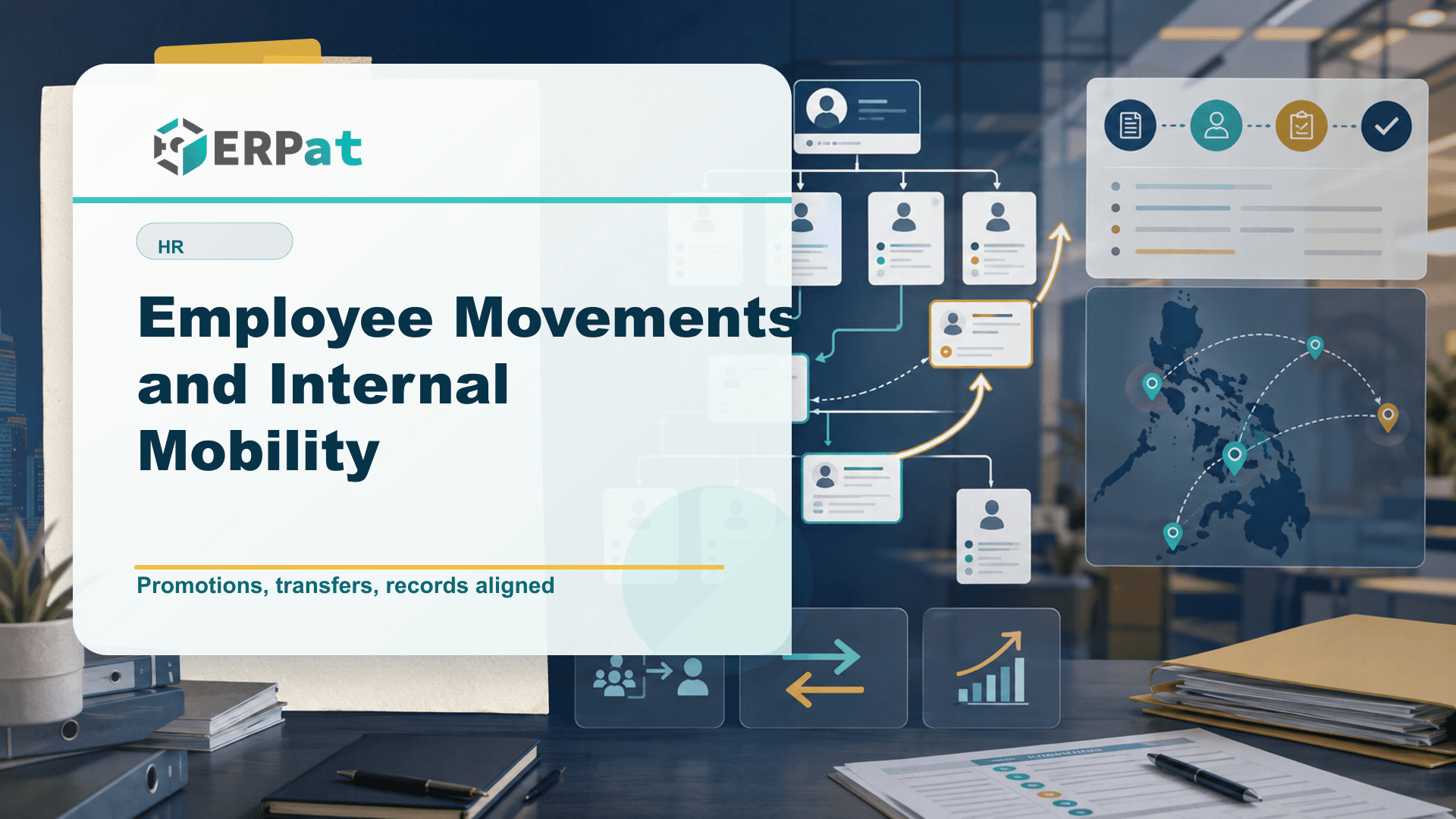
ERPat's Movements module exists for exactly that gap. It keeps employee movement audit trails: each movement is recorded as its own dated entry against the employee, rather than as an edit that quietly replaces what was there before. The record of a transfer does not vanish when the next transfer happens. It stacks.
What this buys you is boring and valuable. You can read the sequence — this person joined here, moved there, took this role, on this effective date, approved by this person. Because ERPat is a single integrated platform, that history sits alongside the rest of the employee's file rather than in a separate HR spreadsheet that payroll never sees. When a question comes up about when a change took effect, the answer is a record instead of a recollection.
It also quietly changes how the decision gets made. A movement that has to be entered, dated and approved is a movement someone has thought about.
Internal hiring people can actually see
A lot of internal hiring in small and mid-sized Philippine companies happens by tap. A manager needs someone, thinks of a name, and has a quiet conversation. It works, and it is also why capable people apply elsewhere: they never knew the role existed.
The Movements module includes a self-service internal job portal, so open roles are posted where employees can browse and apply for them themselves. That is a small mechanical change with a large cultural effect. Openings become visible, an interested employee raises a hand instead of waiting to be noticed, and the application itself is a record from the start — which is exactly the evidence you want when someone later asks why a role went to one person and not another.
It gives you a signal about your own workforce, too. When nobody inside applies for a role you keep filling externally, that is worth knowing.
Grounding promotions in something reviewable
The hardest part of a promotion is not the paperwork. It is explaining, months later, why this person and not that one. Impressions are difficult to defend, and impressions are the default when nothing else exists.
ERPat's KPI Matrix module gives you something more reviewable. Metrics are weighted by role, so a collections officer and a support supervisor are measured against yardsticks that suit their actual work instead of one generic form. Individual scorecards roll up into a team matrix, which lets you compare within a team rather than argue from memory. And because the module turns scores into salary recommendations, the pay conversation starts from something traceable instead of from who negotiated hardest.
The two modules cover the whole arc: the KPI Matrix supports the decision, the Movements module records it. A recommendation is still only a recommendation — judgment, business conditions and budget all sit on top of it — but the reasoning now lives somewhere other than a manager's head.
Decide the mobility policy before you need it
Internal hiring in ERPat is governed by a configurable mobility policy, and configuring it forces a set of decisions most companies otherwise make case by case, under pressure, in the middle of a disagreement between two managers.
The questions are the ordinary ones, and they are worth settling in advance. How long should someone hold a role before applying for another? Is the current manager notified when a team member applies, and at what stage? Who approves a movement — the receiving manager, the releasing manager, HR, or all three? How much notice does a releasing team get? Does a move take effect at the start of a payroll period or on any date? Written down once, these stop being negotiations and start being process.
A clean movement record shows what was approved and when, but it cannot make an unreasonable transfer reasonable or replace the conversation the employee deserves. Changes that touch rank, pay or benefits still need to be handled properly and explained in person before anyone enters them into a system.
Where to start
You do not need to reconstruct a decade of history to benefit from any of this. Start with the next movement: decide what your company counts as one, record it with an effective date and a named approver, and keep the request that started it. Do that consistently for a year and you will have something most growing companies never build — a workforce history you can actually read, and the ability to answer "why did this change?" without having to call three people.
HRIS implementation context
Use "Employee Movements and Internal Mobility" to improve the employee workflow
HRIS articles become more valuable when the team connects the idea to a real employee journey: hiring, onboarding, scheduling, requests, approvals, records, reporting and self-service.
Part 1Employee moments to map
Start with the everyday work employees and HR teams repeat. Those moments reveal where a system should reduce friction.
- Onboarding records, employee profile updates and document collection
- Attendance, schedules, leave filing and approval requests
- Payslip access, benefit questions and HR announcements
Part 2Adoption details that matter
A good HRIS rollout is part process design and part change management. People need clear ownership and a reason to trust the system.
- Assign owners for data cleanup, approvals and employee questions
- Train managers on approval behavior, not only button clicks
- Keep employee self-service simple enough for repeat monthly use
Part 3Measures to track after rollout
The goal is not just digitization. The goal is fewer delays, clearer records and less back-and-forth.
- Time to complete onboarding or profile updates
- Number of HR requests handled without manual follow-up
- Accuracy and completeness of employee records before payroll cutoff
Chelsea Cuevas
Content & Marketing Associate
Covers business growth, HR best practices, and the technology behind modern operations.