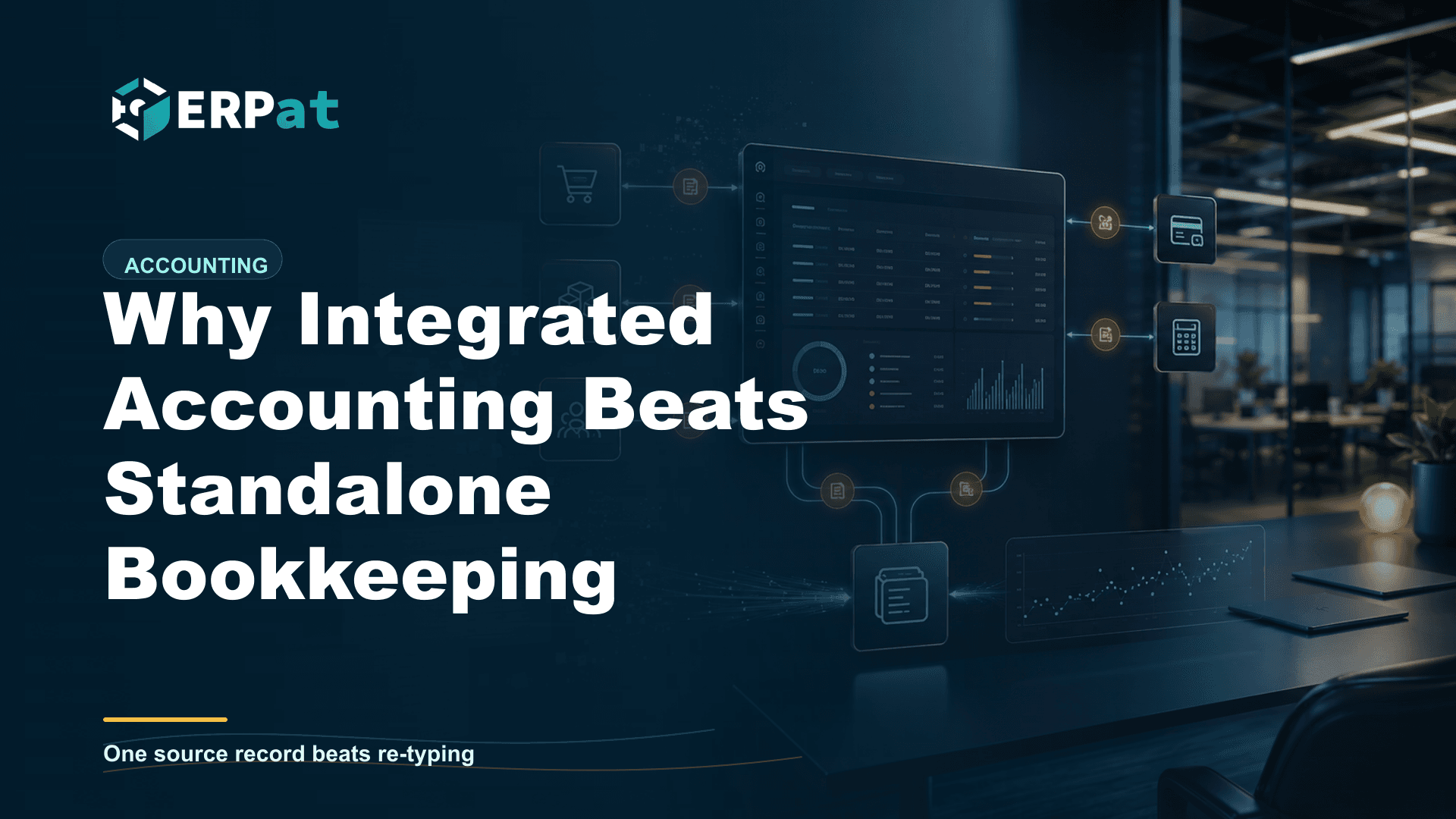

Fixed Assets: Tracking What Your Business Owns
Most companies know what they bought but not where it ended up. Here is how a proper fixed-asset register tracks custody, assignment, maintenance and disposal so your books and your stockroom describe the same company.
In this guide
What to watch for
Use the article to find where source records and approvals need a cleaner audit trail.
In this article
Ask a business owner what their company owns and you will usually get a confident answer: a few delivery vehicles, some laptops, the aircon units, the office furniture. Ask who is holding each of those items right now, when each was last serviced, and what happened to the three units replaced last year, and the confidence tends to fade. The purchase is always recorded. What happens to the asset afterwards, very often, is not.
The purchase is recorded, the asset is not
When you buy a delivery van or a batch of laptops, the transaction gets captured properly. There is a supplier invoice, an official receipt, a journal entry, and eventually a depreciation schedule that your accountant carries forward so the cost is spread across the periods that actually use the asset. That part is usually solid, because it has a deadline attached to it: the books have to close, and BIR expects the figures to be supported.
The asset itself has no deadline. Once it is delivered it moves — from the receiving area to a desk, from one branch to another, from an employee who resigned to whoever inherited the workstation. None of that movement produces an accounting entry, so none of it lands anywhere. A year later the ledger says the company owns fifteen laptops. Nobody can say which fifteen, or where they are. The financial record and the physical record have quietly stopped describing the same company.
Custody: every item needs a name attached to it
A fixed-asset register that lists only descriptions and amounts is a list of things you once bought. What makes it operationally useful is the custody column: which employee, department or location is currently responsible for each item, and since when.
Assignment is not about suspicion. It is about having one obvious person to ask. When a monitor stops working, when a service vehicle is due for renewal, when a laptop has to be recalled for reimaging, the question "who has it" should take seconds rather than a chat thread. Custody records also make clearance genuinely workable: a resigning employee can be checked against the exact items issued to them instead of against somebody's memory.
The discipline that keeps this honest is recording the transfer at the moment it happens. An asset handed from one staff member to another without an entry breaks the chain, and every later count inherits that error. ERPat's Assets module keeps assignment attached to the asset record itself, so custody is part of the item's history rather than a side spreadsheet one person maintains.
Maintenance history is part of the asset record
Repairs tend to be filed as expenses and then forgotten. That is a loss, because maintenance history is one of the few pieces of evidence you have about whether an asset is still worth keeping. A generator serviced twice this year at rising cost is telling you something a depreciation schedule cannot: the book value may be falling on a neat straight line while the real cost of ownership climbs.
Keeping service dates, findings and costs against the asset instead of against a general repairs account changes how replacement decisions get made. You can see which units consume the most attention, which supplier's equipment holds up under daily use, and which items have reached the point where replacing beats repairing one more time.
It matters on the compliance side too. Vehicles have registration and inspection cycles. Equipment often carries warranty and service terms that only hold if maintenance was actually performed and documented. A record that lives with the asset survives staff turnover; one that lives in an email thread does not.
Disposal is where the register quietly breaks
Assets leave a company in several ways. They are sold, traded in, scrapped, donated, lost, or written off after damage. Each of those is a real accounting event: the asset and its accumulated depreciation come off the books, and any gain or loss on the disposal belongs in the right period.
In practice this is the step most often skipped. The old air-conditioning units are hauled away by the contractor installing the new ones, and nobody thinks to tell accounting. The register keeps carrying them, depreciation keeps running, and the balance sheet slowly fills with assets that no longer exist. At year-end it surfaces as a reconciliation nobody can explain.
Recording the disposal closes the loop: what left, when, by what method, with whose approval, and for how much. That gives your accountant what they need to derecognise the item correctly, and gives an auditor or a BIR examiner a documented reason for the removal. A disposal without a paper trail is indistinguishable, from the outside, from an asset that simply went missing.
What a single register gives back
Once custody, maintenance and disposal all sit against the same record, several yearly ordeals stop being projects. The physical count becomes a comparison against a list that already reflects reality. Insurance renewal no longer requires building a fresh inventory from scratch. Capital-expenditure planning has something better than a hunch behind it.
None of this replaces walking the floor. A register only holds what people entered into it, and it drifts the moment issuances and transfers stop being logged. What it does is keep the drift small and visible, so a count becomes a check rather than a rediscovery.
Where to start
You do not need a complete register on day one. Begin with the assets worth chasing — vehicles, IT equipment, tools, anything portable and expensive — and record for each one what it is, who holds it, and where it sits. Add maintenance entries as they happen and disposal entries as they happen, and within a cycle or two the register catches up with the company. The goal is not a tidier spreadsheet. It is being able to answer, on any ordinary Tuesday, what your business owns and who is holding it.
Finance operations context
Use "Fixed Assets: Tracking What Your Business Owns" to tighten finance review
Accounting articles should help the team reduce reconciliation work and make records easier to explain. Read the guidance against how source transactions become reports, approvals and decisions.
Part 1Records that should connect
Finance teams lose time when sales, expenses, payments and approvals sit in separate places.
- Invoices, official receipts, payment status and customer balances
- Expense requests, approvals, supporting documents and account codes
- Payroll costs, government remittances and month-end summaries
Part 2Review controls to strengthen
A reliable finance workflow lets reviewers trace numbers back to source records without asking another team to resend proof.
- Keep approval status visible before reports are finalized
- Separate draft, reviewed and approved financial records
- Document adjustments with reasons and reviewer names
Part 3What better visibility should produce
The strongest sign of improvement is less time spent reconstructing what happened.
- Faster month-end close and fewer unexplained balances
- Cleaner audit trail for adjusted or corrected transactions
- Reports that operations and finance teams can both trust
Jerome Evangelista
Content & Solutions Writer
Writes about payroll automation, HRIS, and how Philippine businesses run leaner with ERPat.