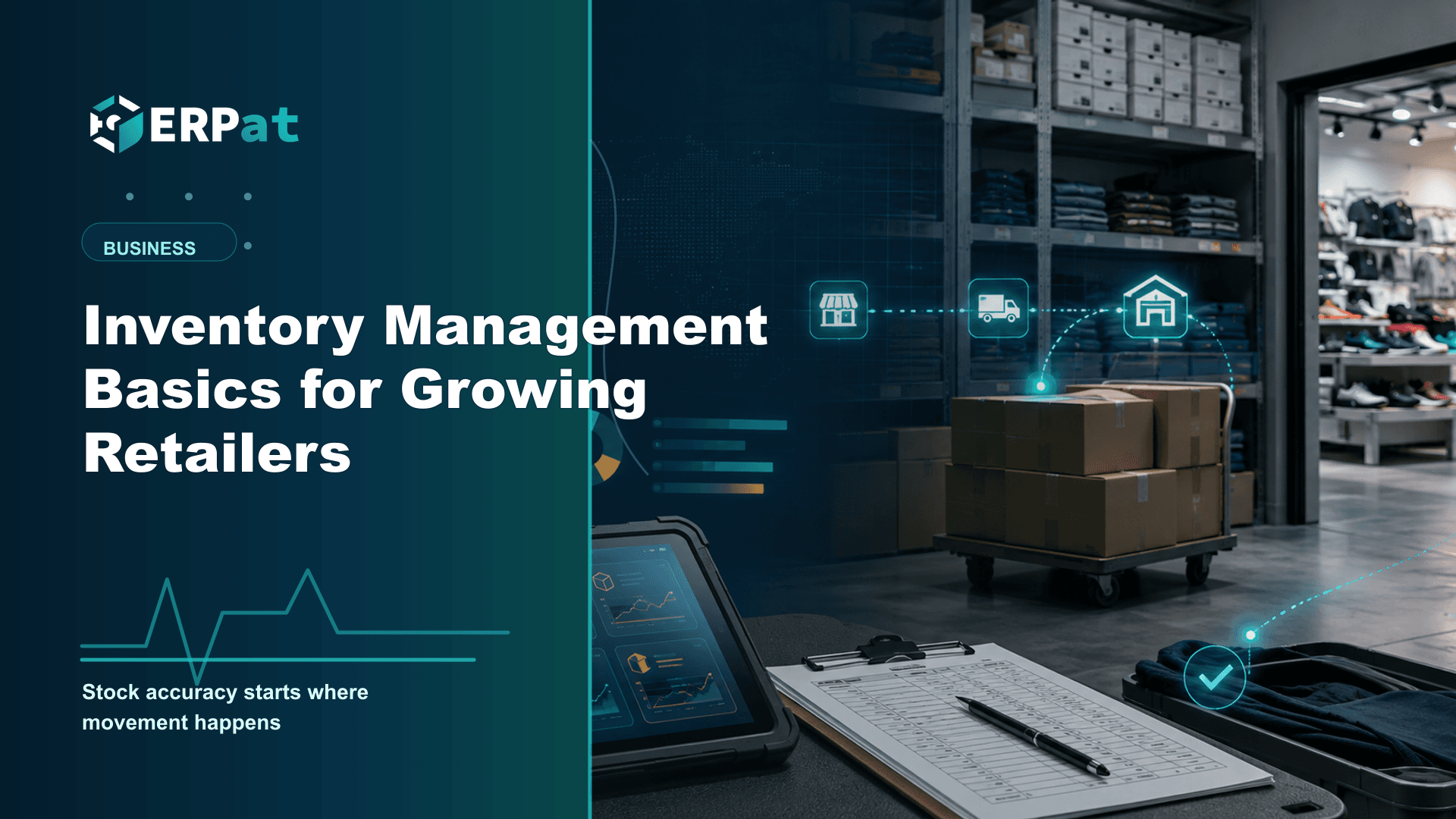

Warehouse Operations: From Receiving to Dispatch
Stock accuracy is won and lost between the receiving door and the dispatch bay. This guide walks through bin-level storage, put-away discipline, picking accuracy and clean dispatch records for growing Philippine warehouses.
In this guide
What to watch for
Use the article to identify repeat work, handoff gaps and places where one source of truth would help.

In this article
- Receiving sets the ceiling for everything downstream
- Bin-level storage turns a location into an address
- Put-away decides how expensive picking will be
- Picking accuracy is mostly an instruction problem
- Dispatch, returns and the movement between sites
- One stock figure the whole business can use
- Starting small enough to actually finish
A warehouse rarely loses stock all at once. It loses it a few units at a time — a delivery signed for before it was properly counted, a pallet put away in whichever aisle happened to be clear that morning, a picker who took the closest identical carton instead of the one the paperwork intended. By the time a physical count disagrees with the books, the trail has gone cold and the discussion turns into guesswork. The fix is not a bigger count at year-end; it is tighter control at each of the four moments stock actually changes hands.
Receiving sets the ceiling for everything downstream
Whatever accuracy you achieve at the receiving door is the best accuracy the rest of the warehouse can inherit. If a delivery is booked in as forty cartons when thirty-eight arrived, no amount of careful picking later will reconcile the difference — it will simply surface weeks afterwards as an unexplained shortage.
The practical discipline is unglamorous. Count against the delivery document rather than the supplier's word, separate short and damaged items before they mix with good stock, and record what was actually received rather than what was expected. Receiving against the purchase reference matters just as much, because it is what lets finance match a supplier invoice to goods that genuinely arrived.
The second habit worth building is speed. Stock sitting on the receiving floor is stock that exists physically but not yet in the system, and that gap is where "we have it somewhere" starts. Booking receipts the same day keeps the record and the floor in step.
Bin-level storage turns a location into an address
Most small warehouses start with location names that mean something only to the people who work there — "the back rack", "beside the office", "the mezzanine". That works while the team is five people who have all been there for years. It stops working the moment you hire, open a second site, or stock two variants that look identical on the shelf.
Bin-level storage replaces those informal names with real addresses. Every rack, shelf and bin gets an identifier, and every unit of stock is held against one of them. ERPat's Warehouse module is built for exactly this: bin-level storage, picking and put-away operations for higher-volume sites where "somewhere in aisle three" is no longer a usable answer.
The payoff is not only faster picking. Addressed stock lets you investigate a discrepancy at the bin instead of the building, count a section without shutting the whole warehouse, and hand a new staff member a location they can find without a tour. It also makes slow-moving stock visible, because a bin that has not been touched in months is easy to spot when bins are tracked individually.
Put-away decides how expensive picking will be
Put-away is the step teams treat as tidying up, and it is the step that quietly sets the cost of every pick that follows. Stock stored wherever there was room means pickers walk further, split their attention across the building, and are more likely to substitute a lookalike item to save a trip.
Doing it deliberately means deciding where an item belongs before it moves: fast movers within easy reach and near the dispatch side, bulk and slow stock further out, and related items grouped so a common order does not span the whole floor. Recording the put-away as it happens — not at the end of the shift, from memory — is what keeps the bin record trustworthy.
Addressing stock in software while the racks themselves carry no visible, durable labels puts the whole burden on people remembering the scheme. Label the physical locations first, then map them in the system.
Picking accuracy is mostly an instruction problem
When picking errors are investigated honestly, the cause is usually the instruction rather than the picker. A list that names an item but not a location asks someone to search; a list ordered by customer rather than by route asks them to crisscross the floor; a list that does not distinguish two similar variants invites the wrong one.
Picking against bin locations removes most of that ambiguity. The instruction becomes go here, take this quantity, confirm it — a task that can be checked rather than trusted. It also lets you sequence a pick list by the path through the warehouse instead of the order lines were typed, which shortens the walk without asking anyone to work faster.
Confirming picks as they happen matters for the same reason receiving does. A pick recorded at the shelf keeps the on-hand figure accurate for whoever is checking availability at that moment, including sales staff quoting a customer who is still on the phone.
Dispatch, returns and the movement between sites
Dispatch is the last point where an error is cheap to fix. Once a delivery leaves, a mispick becomes a customer conversation, a return trip and a credit note. A packing check against the picked quantities — done by someone other than the picker where headcount allows — catches the errors the earlier steps missed.
This is also where the warehouse stops being self-contained. ERPat's Logistic module covers deliveries, dispatch, returns and supply movement across your fulfilment network, so a shipment leaving one site and a transfer arriving at another are recorded as movements rather than as disappearances and surprises.
Returns deserve the same rigour as receiving, because they are receiving. Goods coming back need to be counted, assessed and either restocked to a real bin or held apart from sellable stock. A return that is acknowledged but never put away is stock the system believes you can sell and the shelf cannot supply.
One stock figure the whole business can use
Each of these steps produces a movement, and the value of recording them properly is that they add up to a single reliable number. The Inventory module holds stock levels, transfers and adjustments across every location, so the figure a buyer sees when raising a purchase order is the same one a salesperson sees when promising a delivery date.
Adjustments are worth treating as findings rather than corrections. When a count differs from the record, the adjustment is evidence about where control is slipping — a bin that drifts repeatedly is telling you something about how that area is being worked, and it is far more useful than the corrected total.
Starting small enough to actually finish
You do not need to address the entire warehouse in one weekend. Pick the area that causes the most disputes — usually fast-moving stock near dispatch — label its locations properly, map it in the system, and hold the receiving and put-away discipline for a month before extending. Getting one aisle genuinely accurate teaches the team more than a full rollout nobody has time to maintain, and it gives you a working reference for every section that follows.
Technology decision context
Use "Warehouse Operations: From Receiving to Dispatch" to make a better systems decision
Technology articles are most useful when they help the team decide what to change next. Focus on the process problem first, then choose the tool or integration that removes the most repeated work.
Part 1Start from the workflow, not the tool
A system change should solve a visible operational problem. Map who creates data, who reviews it and who depends on the result.
- Identify repeated encoding, manual exports and duplicate records
- Find handoffs that rely on reminders instead of system status
- Separate must-have controls from nice-to-have interface features
Part 2Integration details to check
A useful system should reduce context switching and make data easier to trust across teams.
- Which records need one source of truth?
- Which reports depend on data from more than one department?
- What permissions, audit logs and backups are required?
Part 3How to judge success
A better technology setup should improve speed, reliability and confidence in decisions.
- Fewer manual workarounds after rollout
- Shorter time from request to approval or report
- Clear ownership when something is missing or incorrect
Chelsea Cuevas
Content & Marketing Associate
Covers business growth, HR best practices, and the technology behind modern operations.