Overview #
The Brands Module allows businesses to manage different brands associated with their products. Users can create, categorize, and track brands, ensuring better organization and brand-specific sales tracking across the inventory system.
Key Features #
- Brand Directory
- Brand Associate Tracking
- Status Management
- Audit Trail
- Integration with Inventory
- Date Export
- Role-based Access Control
Accessing the Brand Module #
- Log in to the ERPat System.
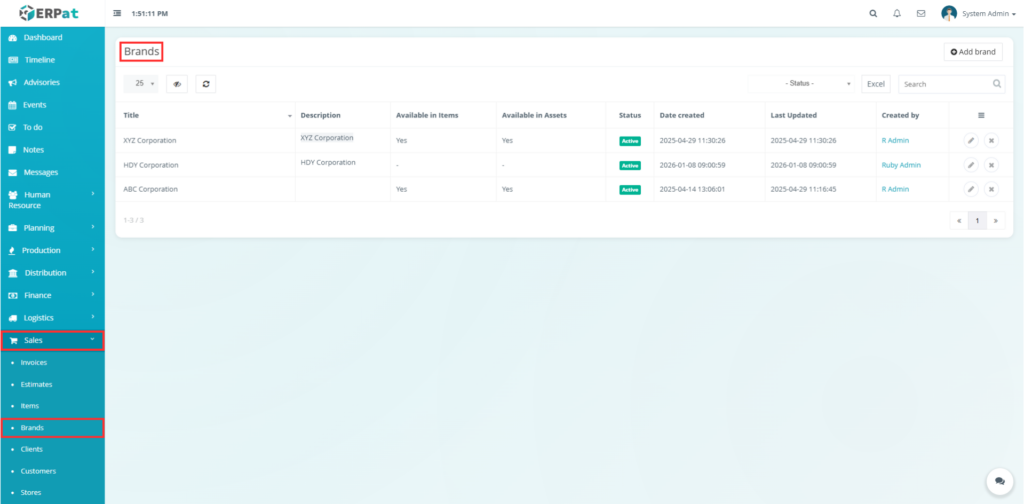
- Navigate to Sales from the main sidebar.
- Select Brands.
Brands – Listing Page #
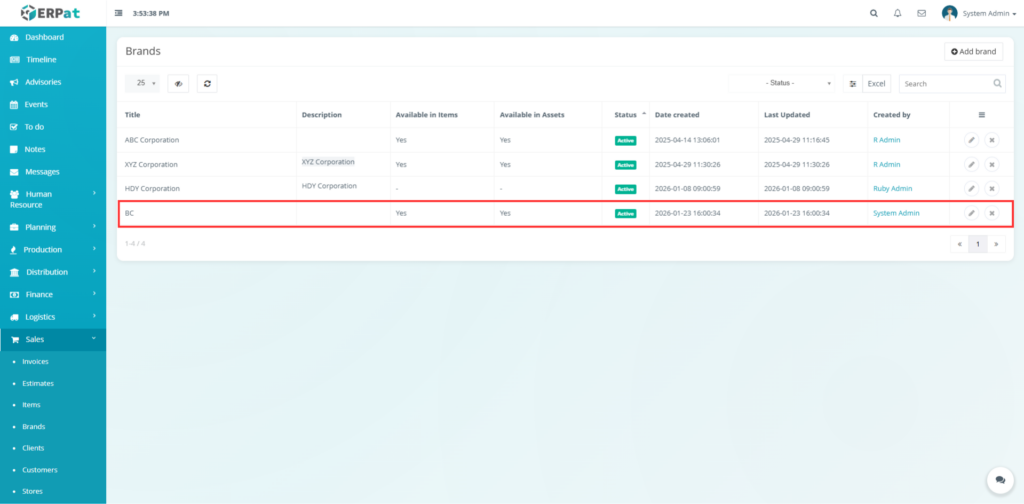
The Brands module displays all registered brands with the following columns:
- Title – Name of the brand.
- Description – Additional details or specifications about the brand.
- Available in Items – Indicates whether the brand is linked to any products/service (Yes/No)
- Available in Assets – Indicates whether the brand is linked to any assets. (Yes/No)
- Status – Shows if the brand is Active or Inactive.
- Date Created – Timestamp where the brand record was added.
- Last Updated – Timestamp of the most recent modification.
- Created by – Username of the user who created the brand entry.
Additional Controls #
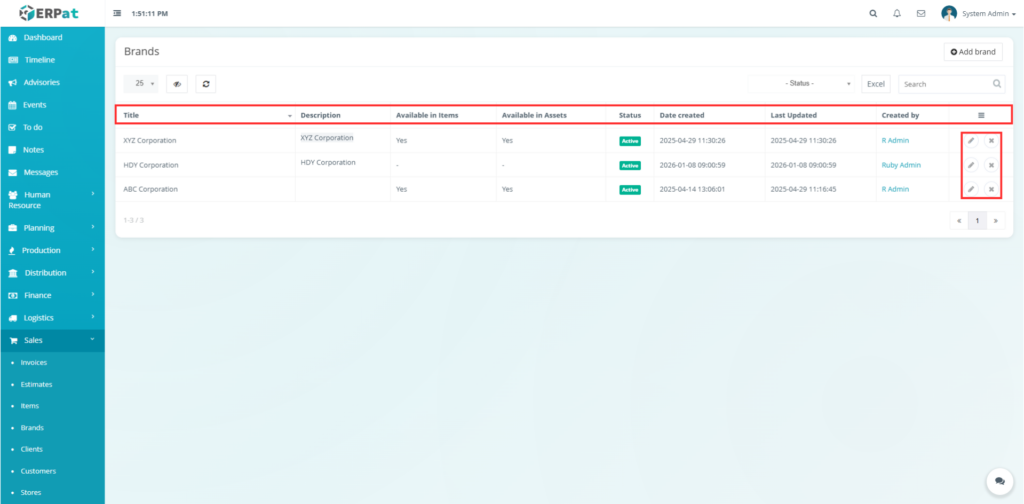
- Add Brand Button to create a new brand.
- Edit Button (per row) to modify an existing brand’s details.
- Delete Button (per row) to remove a brand.
- Status toggle to quickly activate or deactivate a brand.
- Search bar to filter brands by status, association, or date.
- Refresh button to reload the current brand list.
- Column visibility toggle to show or hide the column in the table view.
- Excel export button to download the brand list as a spreadsheet.
- Pagination controls to navigate between pages of brands when the list is long.
- Bulk actions dropdown to apply actions to multiple brands at once.
- Sortable headers to sort brands by title, date created, etc.
Steps for Adding a Brand #
Steps #
- Navigate to the Entries tab in the Item page.
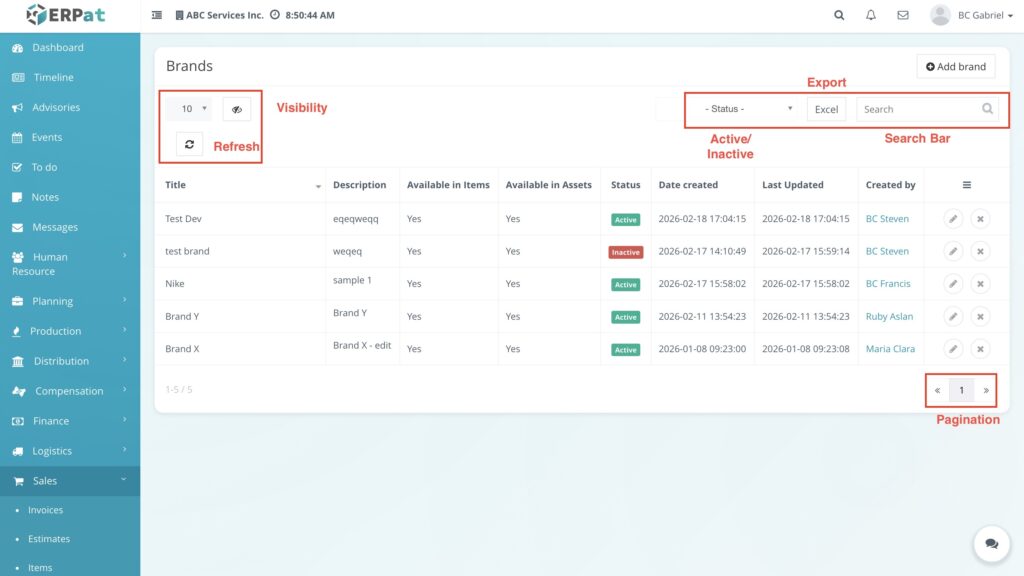
- Click the Add brand button at the top of the table view.
- Fill in the required fields:
- Brand Title
- Description
- Available in Items (Yes/No)
- Available in Assets (Yes/No)
- Status
- Review all details for accuracy.
- Click Save to add a brand.
Result #
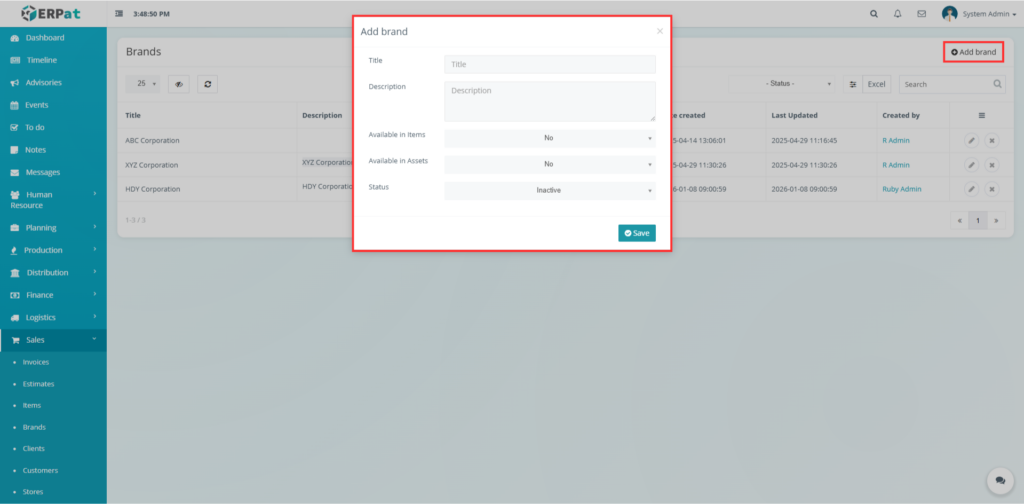
Once the brand is added, it will appear in the Brands list.
Steps for Editing a Brand #
Steps #
- Navigate the Brands from the listing page.
- Locate the brand you wish to edit using the Search bar or by browsing a list.
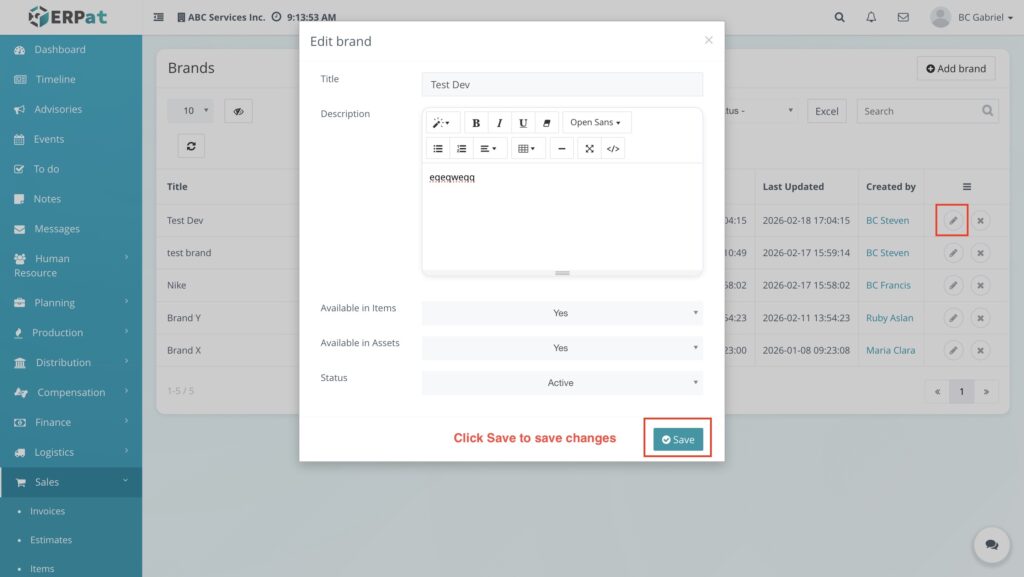
- Click the Edit button in the actions column for that brand.
- In the edit form, update the desired fields:
- Title
- Description
- Status (Active/Inactive)
- Review your changes for accuracy.
- Click save button to apply changes.
- The updated brand information will now be reflected across all linked items and assets.
Steps for Deleting a Brand #
Steps #
- Locate the brand you wish to remove from the Brands listing.
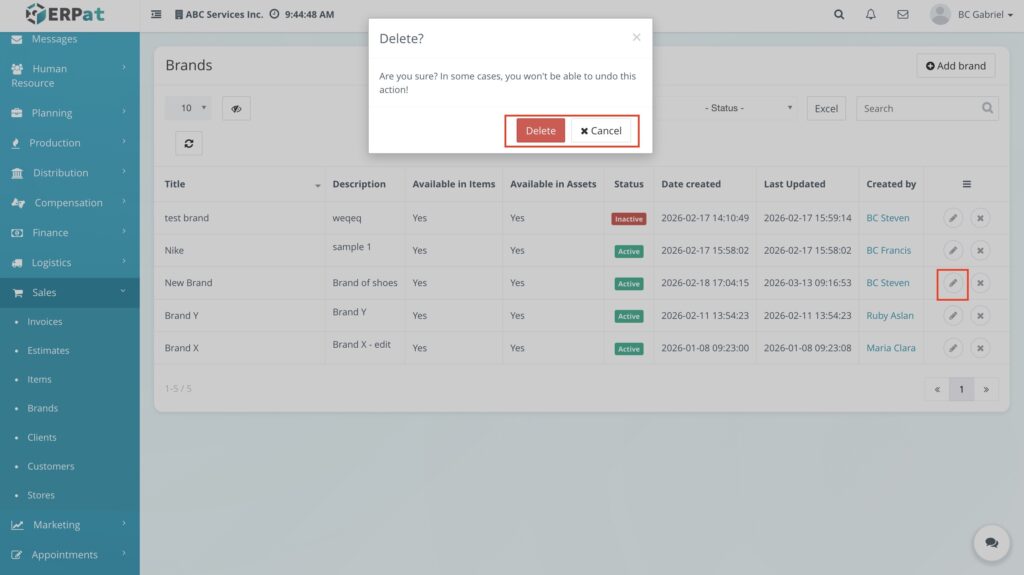
- Click the Delete (×) icon under the Actions column.
- Confirm the deletion when the system prompt appears.
Result #
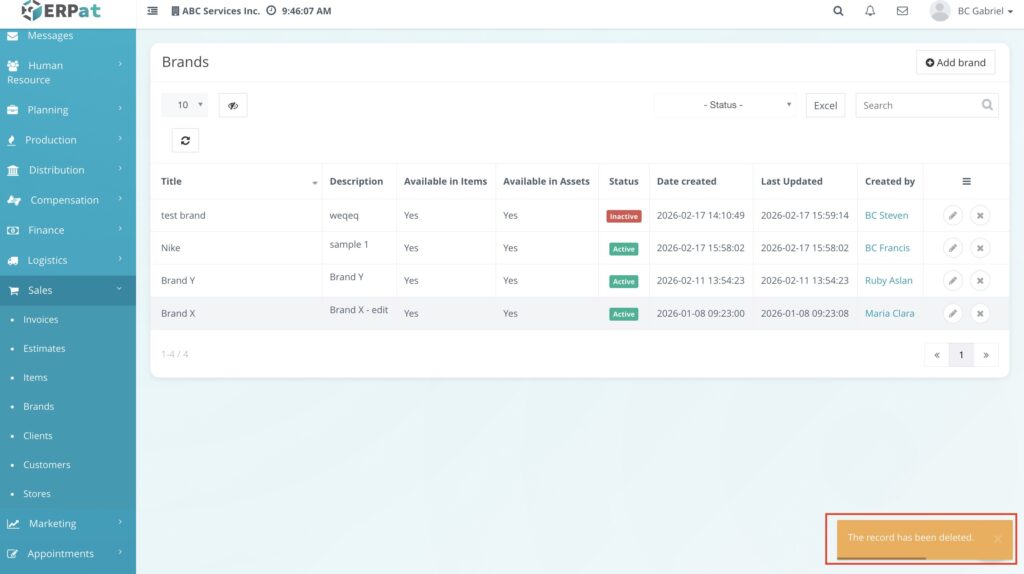
The brand will be permanently removed from the directory.
Permissions and Access Control #
- Authorized Roles: Only users with Sales or Admin roles are permitted to create, edit, or delete estimates, estimate requests, and estimate forms.
- View-Only Access: Read-only permissions may be granted to specific users who need to monitor estimate activities and status updates without the ability to modify records.
Best Practices #
- Standardized Naming: Use clear and consistent titles for all estimate forms and requests to ensure they are easily searchable and identifiable by the team.
- Data Verification: Double-check client details, service line items, and pricing for accuracy before saving or finalizing a submission.
- Data Retention: Avoid deleting active estimates or request forms that are currently linked to ongoing transactions or pending approvals.
Audit & Logs #
All actions—including the creation, modification, and deletion of estimates, estimate requests, and estimate forms—are automatically captured in the ERPat System. These logs provide a permanent record for monitoring, internal audits, and compliance tracking.
Last Updated: March 13, 2026 Module Owner: Sales & Inventory – ERPat System


